Sleep science & bedding materials
How Wool Comforters Balance Airflow and Insulation
Wool has a distinctive way of managing warmth: it can insulate against cool air while allowing moisture vapor to move through the bedding. How that balance feels at night depends on more than the fiber alone. Fill quantity, stitching, shell fabric, room temperature, and personal comfort all help determine whether a wool comforter feels light, substantial, or too warm.
When choosing bedding, it is tempting to look for a single material that promises to keep everyone comfortable in every season. Sleep is less uniform than that. One person may welcome a weighty, warm cover, while another wakes feeling overheated beneath the same layers. Wool is worth understanding not because it is a universal answer, but because its structure and moisture behavior give it a different profile from many common comforter fills.
This guide explains how wool comforters can balance airflow and insulation, what construction details influence their performance, and which practical questions matter before bringing one into a bedroom. It also places Vispring in context as a bedding brand associated with wool in the wider sleep environment, while keeping the focus on material education rather than brand claims.
What makes wool different?
Wool fibers are formed with a natural crimp, or waviness. In a filled textile, that structure helps create small spaces that hold still air. Still air slows the movement of heat, contributing to insulation. The amount of warmth a finished comforter provides, however, depends on its overall construction: the type and quantity of wool, how evenly it is distributed, the dimensions of the compartments, and the fabric surrounding it.
Wool can also interact with water vapor. During sleep, the body releases heat and moisture, and the bedding system becomes part of the route through which that warmth and vapor move. Wool fibers can absorb some water vapor into their structure without immediately feeling wet in the way a surface might when liquid moisture is present. This is one reason wool is often discussed in relation to moisture management. It does not mean that a wool comforter eliminates sweating, keeps every sleeper dry, or works identically in every room. The result depends on the full sleep environment and the individual.
Airflow and insulation are related but not interchangeable. A textile may allow some vapor movement while still holding warmth. Equally, a lofty fill may insulate effectively but feel too warm when paired with a heavy shell or multiple blankets. Thinking about wool as a material with particular tendencies—not as a temperature-control device—makes comparisons more useful.
How airflow works inside a comforter
A comforter is a layered system. Its fill sits between shell fabrics, and stitching or internal construction keeps the fill from migrating. Air and moisture vapor do not move through the fill in isolation; they encounter the shell, seams, the duvet cover if one is used, and other layers on the bed. Each part may influence the finished feel.
A breathable shell can support air and vapor movement, while a tightly woven or coated fabric may behave differently. The purpose of a shell is not just to look smooth: it contains the fill, protects it from routine friction, and influences how the comforter drapes. A duvet cover adds another textile layer. A tightly woven cover, a warm blanket underneath, or a mattress protector that retains heat may all change the experience, even when the comforter itself remains the same.
In a wool comforter, fill distribution matters too. If the wool is held evenly in place, warmth is more consistent across the surface. If it shifts or compresses unevenly, some areas may feel flatter or cooler than others. Construction descriptions can help readers understand how a comforter is assembled, but terms vary among manufacturers. When details are unclear, ask how the fill is secured, whether the comforter is designed for use with a duvet cover, and what care the construction permits.
Insulation is about more than warmth
Insulation is often described as a simple measure of how warm a comforter is. In practice, warmth is a sensation shaped by several variables: room temperature, humidity, sleepwear, the mattress and sheets, personal heat production, and the number of layers on the bed. Even the way a comforter drapes can matter. A cover that lies close to the body may feel different from one that holds more space around the sleeper.
Wool’s crimped fibers can help trap air, creating insulating capacity without requiring every wool comforter to have the same weight or loft. A denser or more heavily filled construction may feel warmer and more substantial than a lighter one. But weight should not be used as a direct substitute for warmth ratings: fiber type, fill quantity, quilting, shell, and finishing all contribute, and labels are not always standardized across brands.
For someone who tends to feel cold, a fuller wool comforter might be appealing, particularly in a cool room. For someone who runs warm, a lighter option or fewer layers may be more comfortable. These are starting points, not guarantees. If a seller provides seasonal or warmth categories, treat them as comparative guidance within that maker’s range rather than as a universal scale.
The construction details worth checking
Before comparing prices or relying on a material name, look closely at the comforter’s specifications. Clear information can make it easier to judge whether the product suits your bed, climate, and care routine.
- Fill composition: Confirm whether the fill is wool alone or a blend, and check whether the description specifies any additional fibers.
- Fill quantity or weight: If stated, this can help compare products of the same size and construction. It is most useful alongside other details, not on its own.
- Construction: Find out how the fill is kept evenly distributed and whether the comforter has chambers, quilting, or another arrangement.
- Shell fabric: The shell affects touch, drape, durability, and the movement of air and vapor through the complete comforter.
- Dimensions and fit: Check the finished measurements against the mattress and the look you prefer. A comforter that is too small may not cover the sides adequately.
- Care instructions: Wool products vary. Confirm whether the comforter can be washed at home, requires specialist cleaning, or should mainly be aired and protected with a cover.
- Certifications and sourcing statements: Read exactly what a certification or sourcing claim covers. Do not assume that one label guarantees every environmental, animal-welfare, or chemical attribute.
Construction also affects how the comforter feels in use. Stitching can create a more structured surface and hold fill in defined areas. Some constructions may allow more movement than others, but the effect depends on the design and execution. Asking specific questions is more reliable than assuming that every wool comforter shares the same performance simply because the same fiber appears on the label.
Choosing a warmth level for your bedroom
Start with your actual sleeping conditions rather than an abstract idea of the “best” comforter. Consider the temperature of the room overnight, whether it changes by season, and whether you share a bed with someone who prefers a different level of warmth. Note whether you regularly wake hot or cold, and whether you already use several blankets.
Layering offers flexibility when temperatures vary. A lighter comforter can be paired with a blanket in colder weather, then used alone when nights become milder. The trade-off is that extra layers may change the bed’s weight and airflow. A heavier comforter can simplify winter bedding but may be less comfortable during warm spells. If your home has strong seasonal temperature shifts, the ability to add or remove layers may matter more than choosing one cover to serve every condition.
Think about the bedding underneath, too. Percale cotton may feel crisp and airy to many sleepers; sateen often has a smoother, more draped hand; linen is valued for its texture and moisture-related properties. Individual preference varies, and no sheet weave can compensate for a comforter that is much too warm for the room. Evaluating the bed as a whole helps prevent attributing every sensation to the fill.
Wool comforters and care expectations
Wool care is not one-size-fits-all. A comforter may have a wool fill that should not be machine-washed, even if the shell or a separate wool bedding item can be washed. Follow the maker’s care label rather than general advice for wool garments. Washing the wrong item, using excessive heat, or drying inadequately can damage fibers, distort construction, or leave moisture trapped in the bedding.
A removable duvet cover can help reduce direct exposure to skin oils, dust, and everyday soil. Laundering the cover is generally simpler than cleaning a large filled comforter, although the cover’s own care instructions still apply. Periodic airing may help refresh bedding, but avoid assuming that sunlight or outdoor air replaces necessary cleaning, or that every material should be exposed to strong sun. Follow the manufacturer’s guidance.
Before purchase, consider the practicalities: the comforter’s size, the capacity of your washing machine if home washing is permitted, and access to any recommended professional cleaning. A product that matches your comfort preferences but is difficult to maintain may not be the right fit for your household.
Allergies, sensitivities, and individual comfort
People sometimes choose natural fibers because they hope to reduce irritation or improve comfort. A material’s natural origin does not guarantee that it will suit every person, and a “hypoallergenic” claim needs careful interpretation. Allergic reactions can relate to many things in the sleep environment, including dust mites, detergents, finishes, and other bedding components. Wool itself may also feel uncomfortable to some people because of texture, sensitivity, or personal preference, even when the fiber is contained inside a shell.
If you have a diagnosed allergy, asthma, eczema, or another health concern, consider advice from a qualified clinician rather than relying on broad marketing language. Check the complete product composition, shell fabric, care requirements, and any certification details. A washable cover and a cleaning routine that you can maintain may be useful parts of a broader bedding plan, but neither should be treated as medical treatment.
Where Vispring fits into the conversation
Vispring provides a useful brand reference when considering how wool appears in the broader bedding category. The name can prompt a closer look at how natural materials are described across sleep products, including the distinction between mattress construction, loose comforter fill, and other wool layers. Those are related subjects, but they are not interchangeable: a material used in a mattress does not establish how a separate comforter will feel or perform.
When assessing a Vispring item—or any bedding from another maker—read the specifications for the particular product rather than extending claims from one category to another. Look for the exact materials, construction, care requirements, and intended use. The brand name alone does not tell you the comforter’s warmth, airflow, or maintenance needs.
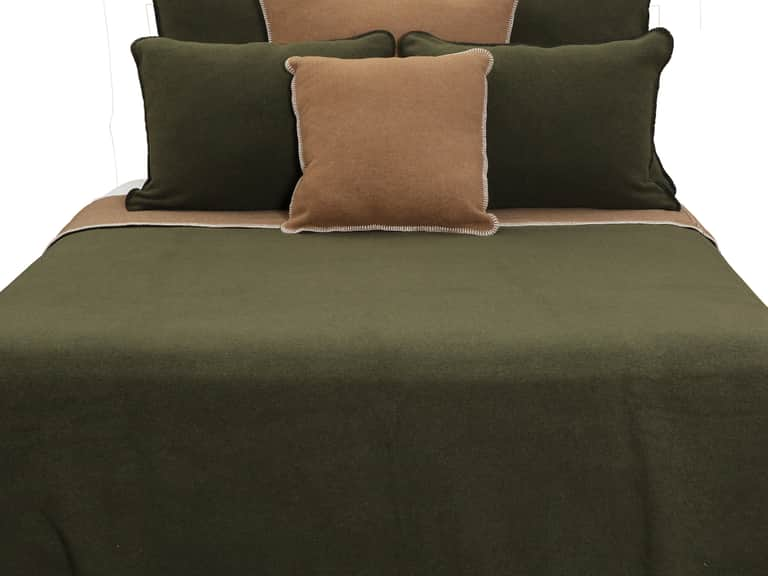
Wool also appears in bedding pieces that are not comforters. For example, the Solid Sage Bedspread by Wooded River is described as a washable wool bedspread. It may be considered as a separate layer in a bedding arrangement, but a bedspread is not the same construction as a wool-filled comforter. Its listed washability should not be taken as guidance for cleaning other wool bedding.
A practical comparison with other comforter materials
Comparing materials is useful when it focuses on trade-offs, not rankings. Down is valued by many sleepers for its loft and warmth relative to weight, though construction, sourcing, and care vary. Down-alternative fills can offer another option, often using manufactured fibers; their breathability, feel, and durability depend on the fiber and design. Cotton, wool, and other natural fills each have different tactile and care characteristics.
Thread count is generally a sheet or shell-fabric measure, not a shortcut for judging a comforter’s total performance. Likewise, labels such as “all-season” or “cooling” need context. They may describe a product’s intended use, but the words do not guarantee a particular experience in every bedroom. Compare specific specifications and consider your own sleep habits alongside the material name.
A simple checklist before you decide
Use these questions to make a more grounded choice:
- Do I usually wake feeling too warm, too cold, or comfortable?
- What is the overnight temperature in my bedroom, including seasonal changes?
- Do I want one substantial layer or a lighter comforter that can be combined with blankets?
- What are the fill, shell, and construction details?
- How is the fill secured, and does the design suit a duvet cover?
- What care does the manufacturer specify, and can I follow it easily?
- Are the size and drape appropriate for my mattress and preferred bed setup?
- Do I have sensitivities that make particular fibers, finishes, or cleaning products a concern?
The broader sleep environment still matters
A comforter is one part of a room that shapes sleep. Light, noise, temperature, mattress comfort, and a consistent routine all contribute to the conditions in which someone rests. If a bedroom feels too warm, changing the comforter may help, but ventilation, room temperature, sleepwear, and other layers may be contributing as well. If discomfort persists or sleep problems are affecting daily life, bedding changes are not a substitute for appropriate health guidance.
There is no single material that guarantees better sleep. The useful question is whether a particular comforter’s warmth, weight, feel, and care needs match your circumstances. Wool’s capacity to hold insulating air while interacting with water vapor makes it an intriguing option for people exploring temperature regulation, but the finished product—not the fiber in isolation—is what you sleep under.
The takeaway
Wool comforters balance airflow and insulation through a combination of fiber structure and product construction. The wool’s crimp can help trap air, while its interaction with water vapor contributes to the way moisture is managed. Shell fabric, fill quantity, stitching, duvet covers, and the rest of the bed all shape the final experience.
For a thoughtful choice, match the comforter to your room, seasonal needs, and personal warmth preference. Read care instructions closely, compare construction details, and treat brand or material descriptions as starting points for questions rather than guarantees. Wool may offer a distinctive combination of warmth and moisture management—but comfort remains personal, and the best bedding is the bedding that suits the sleeper using it.